






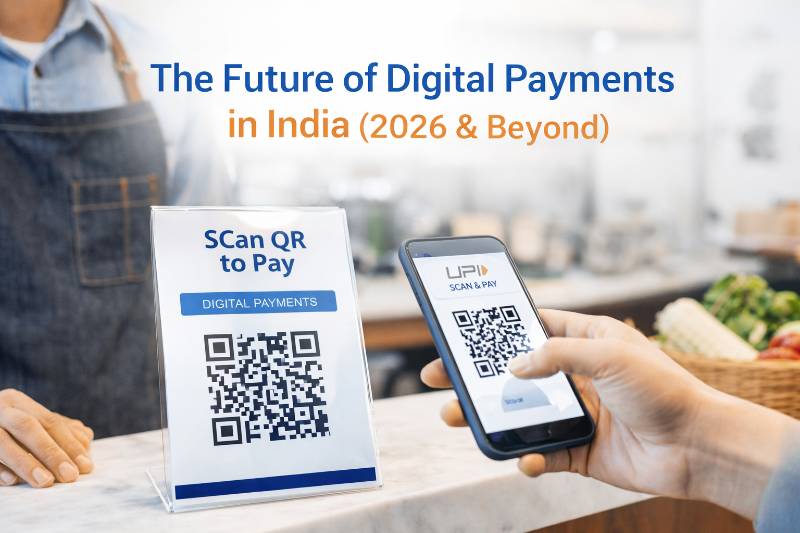
India’s shift to a digital-first payments culture is no longer a forecast—it’s a reality. Over the past decade, the country has moved from experimentation to large-scale adoption. By 2026, digital payments have become a daily habit for consumers, a necessity for businesses, and a strategic priority for regulators and fintech companies.
This article explores what drove this transformation and what lies ahead.
From Trial to Daily Routine
What started as an adoption push—driven by smartphones, government initiatives like Digital India, and Aadhaar-enabled services—has now become part of everyday life.
Today, consumers use digital payments for:
- Groceries
- Utility bills
- Transport
- Government services
This shift is clearly reflected in the consistent growth of UPI transactions, showing that digital payments are no longer occasional—they are habitual.
UPI Growth: The Backbone of India’s Digital Payments
The Unified Payments Interface (UPI) has been the biggest driver of India’s cashless economy.
By December 2025:
- 21.6+ billion transactions were recorded in a single month
- Total value crossed ₹28 lakh crore
UPI succeeded because it solved three major problems:
- Instant money transfer
- Simple user experience
- Open ecosystem for banks and fintechs
This made UPI not just a product, but a payments infrastructure powering innovation.
The Rise of India’s Fintech Ecosystem
India’s fintech ecosystem has grown rapidly, combining technology with strong regulatory support.
Key developments include:
- New consumer apps (one-tap payments, BNPL)
- Merchant tools (QR codes, SoftPOS)
- Embedded finance in non-financial platforms
By 2026, fintech is not just growing—it’s becoming more structured, secure, and scalable.
Cashless Economy: Growth with Balance
India is moving towards a cash-light economy, not a cashless one.
Estimates suggest:
- Digital payments could reach $10 trillion in value by 2026
However, cash still plays a role in rural and informal sectors. The future is about co-existence and gradual transition, not complete replacement.
Merchant Adoption & Contactless Payments
Digital payments succeed only when merchants adopt them widely.
Key drivers:
- QR code expansion
- Low-cost POS systems
- SoftPOS (phones as payment machines)
- NFC-based tap-and-pay
This has made payments faster, easier, and more accessible across all business sizes.
Risks, Regulation & Security
With growth comes responsibility.
Challenges include:
- Fraud risks
- System outages
- Data privacy concerns
Regulators and institutions are focusing on:
- Strong KYC/AML norms
- Payment security & tokenization
- Infrastructure resilience
For businesses, secure and reliable payment systems are now essential.
What Lies Ahead: Future Trends
The future of digital payments in India will be shaped by:
1. Embedded Payments
Payments will become invisible within apps like shopping, travel, and services.
2. Cross-Border Transactions
Faster and cheaper international payments will grow.
3. Merchant-Centric Innovation
Better analytics, faster settlements, and working capital solutions.
4. AI in Payments
Real-time fraud detection and personalized offers.
5. Stronger Regulations
Balancing innovation with consumer protection.
Conclusion
India’s digital payments journey is no longer about adoption—it’s about habit.
Consumers expect fast, secure, and seamless transactions. Businesses must adapt to stay competitive.
The next phase will focus on responsible growth, combining innovation, regulation, and trust.
Looking for a reliable payment solution for your business?
CGPEY helps you with seamless payouts, collections, and payment automation—built for modern businesses.