
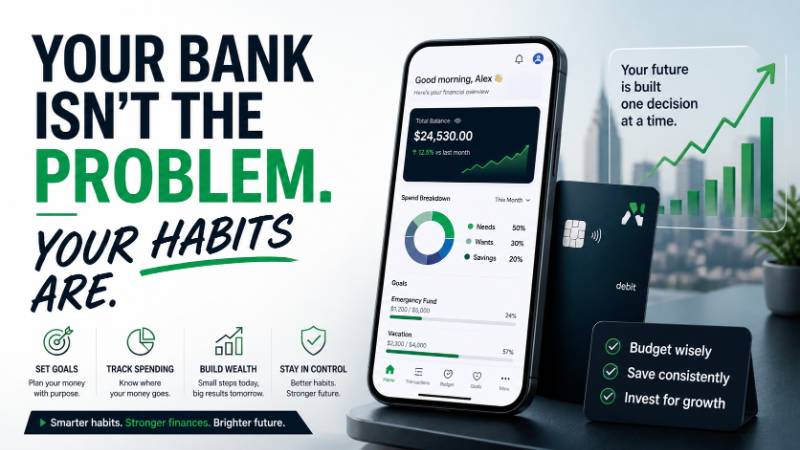
Most business owners think cutting payment costs means switching banks. It doesn't. Over 80% of B2B payment costs live outside your bank — in the rails you pick, the discounts you miss, the FX margins you never questioned, and the manual workflows quietly burning staff hours every day.
Where to cut — and by how much
Renegotiate your processor
Ask for volume-based discounts. Bring a competing quote. Providers cut rates rather than lose accounts.
Save up to $24,000/yr on $1M/mo volumeDitch wires for cheaper rails
ACH costs $0.20–$1.50 vs $15–35 per domestic wire. Same-day ACH now matches wire speed in most cases.
Save $400+/mo on 20 fewer wiresAdd payment orchestration
A smart routing layer on top of your existing bank picks the cheapest rail per payment automatically.
ROI positive within first monthCapture early-pay discounts
2/10 Net 30 terms = 36% annualised return. Most businesses miss 70–80% of available discounts.
Potentially the highest ROI moveCut your FX costs
Use specialist FX providers like Wise Business or OFX alongside your bank. No account switch needed.
Save $4,000–6,000 per $200K transferAutomate accounts payable
AP automation drops cost per invoice from $10–15 down to $2–4. 200 invoices/mo = $31K/yr saved.
Save $19,000–31,000/yrConsolidate payment runs
Switch from ad hoc to twice-weekly scheduled runs. Fewer transactions, simpler reconciliation.
Reduce wire volume by 30–50%Rationalise payment vendors
Audit every outbound payment tool. Consolidating from 4 vendors to 2 cuts fees and complexity.
Eliminate redundant monthly feesRenegotiating your processor: the highest-leverage call you'll make
If your business processes more than $50,000 per month in B2B payments, you have pricing leverage you are almost certainly not using. Payment processors offer volume-based discounts — but only when asked. They never volunteer reductions unprompted.
Come to the conversation with three things: your monthly volume figures, your average transaction size, and a competing quote. Even if you have no intention of switching, the competing quote is your most powerful tool. A provider would rather reduce your margin than lose the account entirely.
The math: A 0.2% rate reduction on $1 million per month in payments saves $24,000 per year. That is the result of a single conversation, not a bank switch.
While you are in that conversation, ask for a full fee schedule in writing. Common hidden charges include monthly maintenance fees, paper statement fees, wire initiation fees per transaction, and currency conversion markups buried inside exchange rates.
The 36% annualised return hiding in your invoices
When a supplier offers 2/10 Net 30 terms, they are offering a 2% discount if you pay 20 days early. Annualised, that is a 36% return on cash deployed. There is almost no risk-free investment that comes close.
Most businesses miss these discounts not because they lack the cash — but because their AP process is too slow. The invoice arrives, sits in an inbox, gets approved in two weeks, and the window has closed.
The fix is process-level: Set up auto-approval for invoices below a threshold (say, $5,000) and target a 5-day payment queue for anything in the discount window. Track your discount capture rate monthly. Most businesses start below 30% and reach 80%+ within a quarter.
The FX cost your bank hopes you never notice
Banks and traditional providers typically charge 1.5% to 3% above the interbank rate on international payments. On a $200,000 supplier transfer, that gap costs $3,000 to $6,000. Per transfer.
You do not need a new bank account to fix this. Specialist FX providers like Wise Business, OFX, or Convera offer rates significantly closer to the interbank rate. You fund the transfer from your existing bank account, they convert and send, and your banking relationship stays untouched.
Three tools to deploy: specialist FX providers for spot payments, multi-currency balance accounts for recurring supplier currencies, and forward contracts to lock in rates on predictable future payments.
How to do this without overwhelming your team
Understand your real costs
Pull three months of bank statements and provider invoices. Calculate total payment cost including transaction fees, FX margins, and an honest estimate of staff time per invoice. Identify your top three cost drivers.
Execute the quick wins
Renegotiate your processor terms. Shift eligible domestic payments from wire to ACH. Set up a twice-weekly payment run schedule. These require no new technology and can be live within two weeks.
Evaluate technology solutions
If international payments are a major cost, open a specialist FX provider account. If AP automation makes sense at your invoice volume, begin platform evaluations. If payment orchestration fits your scale, request demos.
The outcome: Most businesses that follow this process reduce their total B2B payment costs by 20 to 40% within 90 days — without changing their bank.
Stop treating payment costs as fixed
Payouts are not a back-office afterthought. They are a competitive lever. The businesses that pay vendors faster build better supplier relationships. The ones that capture every discount compound their cash advantage quarter by quarter. The ones that stop overpaying on FX and processing put real money back on the table.
None of that requires a new bank. It requires attention — and a 90-day plan.
