
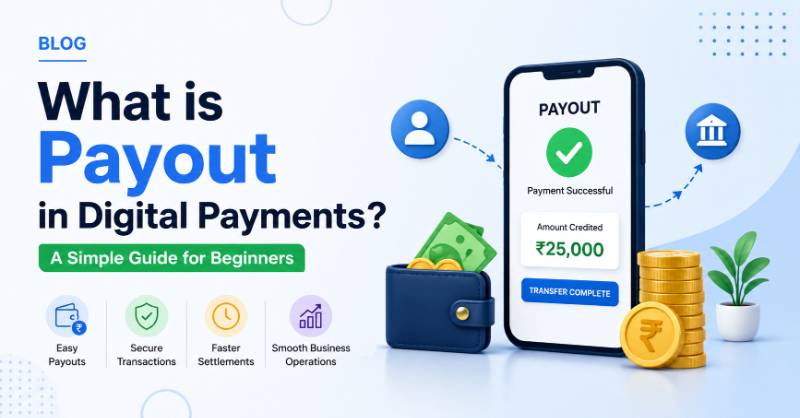
In the world of digital finance, the term “payout” is used very frequently, especially in businesses, fintech apps, freelancing platforms, and online marketplaces. But for beginners, it can sound confusing. Simply put, payout means the process of sending money from a business or platform to an individual or another business electronically.
Let’s break it down in a simple way so you clearly understand how it works in real life.
Understanding Payout in Simple Terms
A payout is when money is transferred from one entity to another as a payment.
For example:
- A company pays salary to its employees → that is a payout
- A freelancing platform sends earnings to freelancers → that is a payout
- An ecommerce marketplace sends seller earnings → that is also a payout
So basically, payout is the “money going out” process in digital form.
Unlike traditional methods like cash or cheques, payouts today are done using bank transfers, UPI, wallets, or automated fintech systems.
How Digital Payout Systems Work
Digital payout systems are built to make money transfers faster, safer, and automated. Here’s a simple flow of how it works:
First, a business or platform collects money from customers (this is called payment collection). After that, when money needs to be distributed—like to sellers, employees, or partners—the payout system comes into action.
The system:
- Verifies the recipient’s bank or UPI details
- Processes the transfer request
- Sends money directly to the beneficiary account
- Confirms successful transaction in real-time or batch mode
All of this happens in seconds or minutes depending on the system used.
Real-Life Examples of Payouts
To make it even clearer, here are everyday situations where payouts happen:
A food delivery app pays its delivery partners weekly based on completed orders. That is a payout system in action.
A YouTuber receives earnings from ad revenue through a platform like Google AdSense. That is also a payout.
An online store pays multiple sellers after customer orders are delivered. Again, that is a payout process.
Even salary transfers from companies to employees are a form of payout.
Types of Digital Payouts
There are different types of payout methods used in modern fintech systems:
Bank Transfer Payouts – Money is directly sent to bank accounts using NEFT, IMPS, or RTGS.
UPI Payouts – Fast transfers using UPI IDs or mobile numbers.
Wallet Payouts – Money is sent to digital wallets like Paytm or other platforms.
Bulk Payouts – Businesses send money to hundreds or thousands of people at once, commonly used in salaries or vendor payments.
Why Payout Systems Are Important
Payout systems have become essential for modern businesses because they simplify financial operations.
Earlier, companies had to manually transfer money, which took time and increased chances of errors. Now, with digital payout systems, everything is automated.
Some key benefits include:
- Faster money transfers
- Reduced manual work
- Better transparency
- Easy tracking of transactions
- Secure payment processing
For businesses handling large volumes of transactions, payout systems save a huge amount of time and effort.
Payout vs Payment: What’s the Difference?
Many people confuse payout with payment, but they are not the same.
A payment is when a customer pays a business.
A payout is when a business pays someone else.
For example:
- Customer buys a product → payment received
- Seller gets money from marketplace → payout sent
So, payment is incoming money, while payout is outgoing money.
Role of Fintech in Payout Systems
Fintech companies play a big role in making payouts smooth and automated. They provide APIs and dashboards that help businesses send money instantly without manual banking steps.
With fintech solutions, even small businesses can:
- Send salary payouts easily
- Pay vendors or freelancers quickly
- Automate recurring payments
- Track all transactions in one place
This is why payout systems are widely used in startups, apps, and online platforms today.
Security in Digital Payouts
Security is a very important part of payout systems. Since money is involved, systems use:
- Encryption to protect data
- OTP verification for transactions
- Bank-level security protocols
- Fraud detection systems
These ensure that money reaches the right person safely.
Conclusion
A payout in digital payments simply means sending money electronically from a business or platform to individuals or other businesses. It plays a crucial role in today’s digital economy, especially in freelancing, ecommerce, fintech apps, and salary systems.
As India continues moving toward a cashless economy, payout systems are becoming faster, smarter, and more automated—making financial transactions easier for everyone.
