
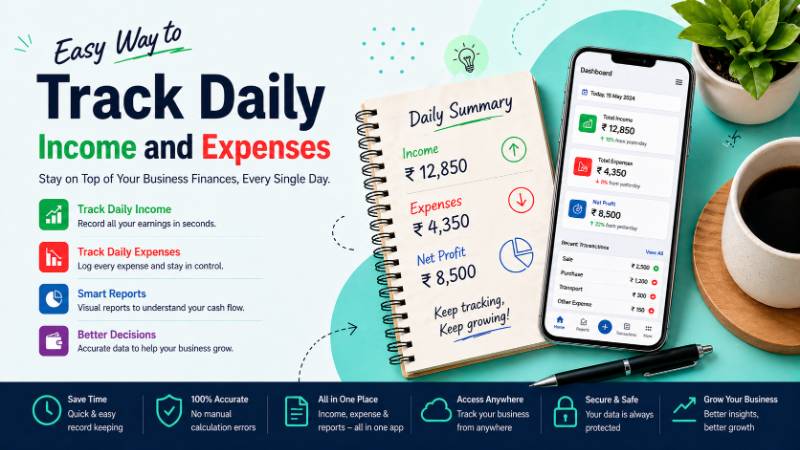
Keeping track of daily income and expenses might sound simple, but in reality, it’s something many people struggle with. Whether you run a small shop, work as a freelancer, or manage household finances, money often flows in and out so quickly that it becomes difficult to keep a clear record. Over time, this lack of tracking creates confusion, reduces savings, and makes it harder to understand where your money is actually going.
The truth is, financial control doesn’t come from earning more—it comes from managing what you already have. When you start tracking your daily income and expenses, you begin to see patterns. You understand which areas are consuming more money and where you can cut down. This awareness alone can significantly improve your financial stability.
In the past, people relied heavily on notebooks or registers to maintain their daily accounts. While this method still works, it requires discipline and consistency. You have to remember to write down every transaction, calculate totals manually, and keep the records safe. Even a small mistake in calculation or a missed entry can disrupt the entire record. Over time, maintaining such records becomes tiring, especially for busy shop owners or professionals.
This is why digital methods have become the preferred choice today. With the increasing use of smartphones and digital payments, tracking money has become much easier. Every transaction made through apps like Google Pay is automatically recorded, which reduces the effort required to maintain separate records. Instead of depending on memory or manual writing, you can simply check your app and get a clear picture of your daily transactions.
What makes digital tracking truly effective is its simplicity. You don’t need advanced accounting knowledge to understand your finances. Most apps are designed in a way that even beginners can use them comfortably. They organize your income and expenses in a structured format, making it easier to review your financial activity whenever needed. This not only saves time but also improves accuracy.
Another important advantage of tracking your daily finances is clarity. When you regularly monitor your income and expenses, you start making better financial decisions. For example, you might realize that a significant portion of your money is going into unnecessary expenses. Once you identify this, you can consciously reduce those costs and redirect the money towards savings or investment. Over time, these small changes create a big impact.
Consistency plays a major role in effective tracking. It’s not about using the best tool or method—it’s about building a habit. When you make it a routine to review your finances regularly, you stay informed and in control. Even spending a few minutes daily to check your transactions can help you avoid major financial issues later.
Another challenge many people face is mixing personal and business expenses. This often leads to confusion, especially for small business owners. When all transactions are combined, it becomes difficult to calculate actual profit or loss. Keeping these two separate, even mentally, brings more clarity and helps in better decision-making. Digital tools make this separation easier by allowing you to categorize expenses and track them accordingly.
Security is also a common concern when it comes to digital tracking. However, most financial apps today follow strict guidelines set by the Reserve Bank of India, ensuring that user data is protected. Features like encryption, secure login, and cloud backup add an extra layer of safety. This means your financial information remains secure while still being easily accessible.
What truly makes tracking powerful is the insight it provides. Numbers on their own may not mean much, but when you look at them regularly, they tell a story. You begin to understand your spending habits, identify trends, and plan your finances more effectively. This insight helps not only in managing daily expenses but also in achieving long-term financial goals.
It’s also worth noting that tracking your finances doesn’t require perfection. Many people avoid it because they feel they won’t be able to maintain it consistently. But even partial tracking is better than no tracking at all. The goal is to stay aware, not to be flawless. Over time, as the habit develops, the process becomes easier and more natural.
In today’s fast-paced world, relying solely on memory is not practical. With multiple transactions happening every day, it’s easy to forget small expenses, which eventually add up. By keeping a record, you eliminate guesswork and gain confidence in your financial decisions. Whether it’s a small purchase or a major expense, everything gets accounted for.
Ultimately, tracking daily income and expenses is about taking control of your financial life. It helps you move from uncertainty to clarity, from confusion to confidence. Whether you choose a simple notebook or a digital app, the important thing is to start. Once you begin, you’ll quickly realize how powerful this habit can be.
